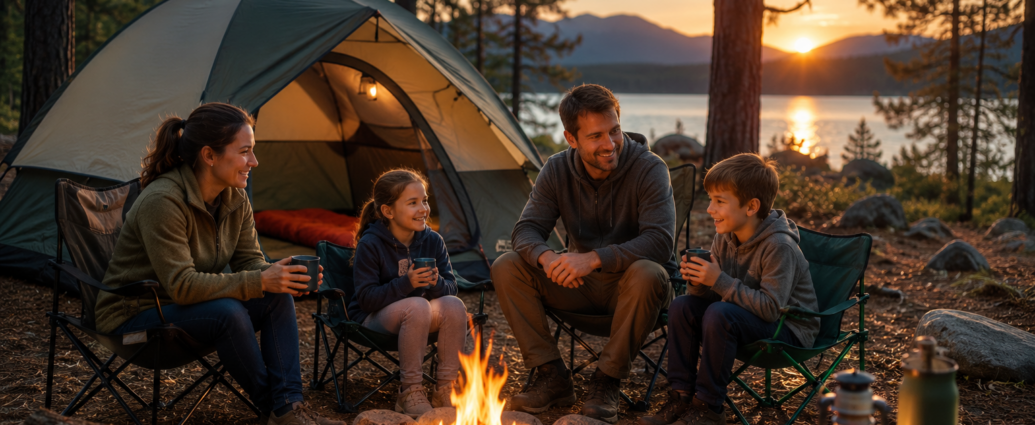
Maybe the first thing to think of when considering family camping trips is tents and hiking trails and s’mores around a campfire. But camping with family doesn’t have to be this rugged! You don’t have to camp on the ground to experience nature, but you can still enjoy it in a nice and comfortable setting! Whether you’re booking your vacation or packing your bags, here are 10 tips to help you plan for your next mindful family camping trip.
1. Research Your Campsite
Check that there is enough wood for at least a three-night stay. If you are car camping, it would be a good idea to prepare yourself in case of a traffic jam or other unforeseen event causing a delay and resulting in you being late for the check-in time. Keep a contingency plan in place in case! Preferably come early to be in a good position.
Always seek bathroom facilities near the campground, but also inquire about quiet hours to ensure that your campsite doesn’t interfere with other campers’ experience. Inform someone of your destination and when to expect you to call back. Nobody wants to embark on an adventure without letting anybody know about where they’re going!
2. Discuss With Your Family What They Would Like To Do While Camping
As you’re reading this article about mindful family camping trips, you can probably assume that you’re looking to plan a fun trip for your kids and/or significant other. First of all, determine what that is. Are they planning on going for a hike? Do they prefer fishing, or do they prefer biking? Look for common ground and develop from there.
3. Discuss The Advantages Of Traveling With A Pet
Pets can be part of the family and an excellent camping companion. But remember to prepare yourself and don’t forget to consider the stress of traveling with pets. If you’re planning a cross-country trip, it’s important to consider your pet’s well-being.
Before embarking on the road, it is advisable to visit a vet to ensure your pets are up-to-date on their vaccinations as well as have identification tags and microchips in case they lose their way. Remember to bring a handful of toys to play with on extended driving trips and waterproof clothing when outdoors, such as hiking.
4. Use The Lightest Load Of Clothing As Possible
If you are camping in an area for a long period of time, it is best to travel as light as possible. Take only what is essential and leave behind what is not essential and will not help. This will avoid a heavy pack which can cause considerable discomfort on long hikes or when putting it on your shoulders while hiking.
Don’t forget some light gadgets that will be nice to have when you are camping out, like extra clothes, a hat, or a jacket if the weather is likely to change during your trip, cooking utensils, etc. Don’t forget to bring a little money for use at the campground for soap, hand sanitizer, toothpaste, and more, as many campgrounds now have these amenities.
5. Pack Efficiently But Be Flexible About What Is Necessary
How much you bring on a camping trip will be based on how long you’ll be camping and your level of preparation. However, there is one item that should be included in every trip that no one can do without: a first aid kit. The rule of thumb is to have at least one kit per group of 4-6 people, which means if you have 2 adults, 2 children, and 2 dogs in your group, you should bring 2 kits (yes, even your dog).
This will make it easier for both adults to attend to injuries or illness, and to monitor their own for other issues if they’ve got health concerns.
6. Hike In Groups Of Two Or More People
When you’re out hiking for hours each day, it’s important to take time to slow down and rest. Carrying backpacks will challenge your cardiovascular system, make your muscles sore, and raise your body temperature. This can result in dehydration, heat exhaustion, and various other health issues.
To help alleviate these problems, take regular rest breaks (at least 15 minutes for every hour spent on trail), and have at least one liter of water in each backpack. Keep in mind that if you’re exercising in hot weather, you need more water than you think; if you’re sweating heavily or hiking at higher elevations.
7. Go On Night Hikes
Most campsites offer nighttime hikes. Ideal for enjoying your natural environment at its most ethereal. This is a wonderful opportunity to look back on the blessings you have of spending time with your family, and the blessing of being able to camp in this beautiful place.
Bring some hot cocoa and blankets or a kite and take a nighttime stargaze! If you don’t want to do a night hike, go for a walk around the campsite after dinner and before retiring to your tent. This is a good time to have some fun talking about the experiences of the day!
8. Visit Museums And Other Local Attractions Before Leaving Town!
Camping is a wonderful time to be with family, but it can also be a fun way to get them exposed to things that they may not have had the opportunity to do otherwise. Just looking to get outdoors and hike? Let’s check out some local wildlife! Your children may even find something that they are interested in and want to experiment with when you’re home! Before hitting up your campsite, make sure that everyone knows what your plans are for before and after so there aren’t any surprises on site.
9. Always Be Conscious Of What Is Around You
You will be in nature, so it’s important that you are aware of your surroundings at all times. Keep yourself and your family from getting too far away and keep everyone else informed on what they are doing. If you are in a park or forest with your family, tell them not to run into an unknown person, or if they see something they don’t think is right, to stay with you until you reach safety.
The last thing you want is for someone in your group to get lost! It’s also a smart idea to have a place for the family to meet, in case someone doesn’t show up.
10. Remember The Marshmallows!
Kids love to get their hands on marshmallows, because they’re incredibly fun to play with. But don’t forget how easy it is for them to quickly turn into a sticky mess that requires you to get out of your cozy tent early in order to scrub it off your camping gear.
To prevent such camping mishaps, just play the game of catch or a game of flashlight tag. S’mores can be prepared at home and taken with you as a campfire tradition! Use a used tin or disposable aluminum pan to pack up pre-made s’more ingredients: graham crackers, chocolate bars, and an entire bag (or box) of marshmallows to avoid any dishes that can break.
Conclusion
Mindful Family Camping is about enjoying and appreciating nature, enjoying and appreciating our time together, and minimizing impact in a manner that will benefit the world. The next time you’re out and about, try out a few or all of these ideas to make lasting memories with friends and family — and help preserve and protect the environment. Who doesn’t want the smiley face to smile more? Begin packing those bags!